
Dam in Tajikistan
The project at a glance
The challenge: bringing an already excavated material into compliance
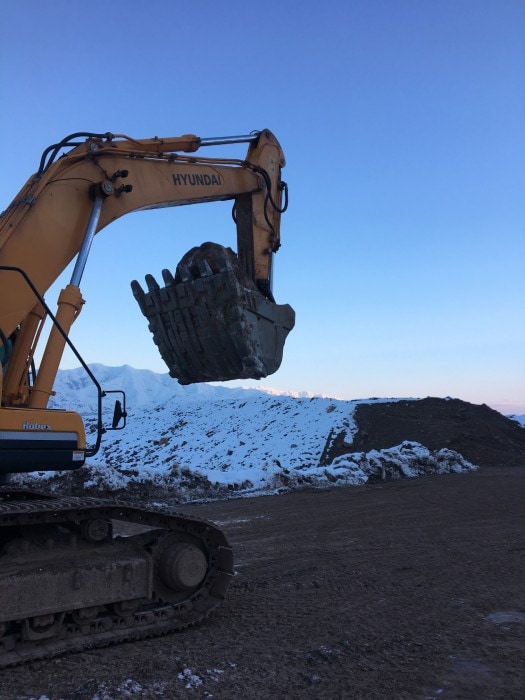
The project in Tajikistan has one feature that sets it apart from all the other ICM case studies: the material to be processed does not come directly from a quarry designed by ICM, but is already excavated by another contractor. The ICM system is not designed to extract and produce aggregates from scratch, but to take that raw alluvial material and process it to meet the technical specifications required for use in dam construction.
This is a common scenario on major construction sites: the material is there, it has already been moved, but it cannot be used directly in the structure in its current form. A system is needed to process it, reduce it to the correct size and ensure the continuous flow required to feed the dam without interruption.
In Tajikistan, this meant designing a system capable of processing alluvial material with a particle size of up to 1,100 mm at a throughput of 3,000 t/h, in one of the most challenging geographical contexts in the world: Central Asia, characterised by harsh winters, limited infrastructure and vast distances from European supply centres.
The ICM approach: a system designed to ensure flow continuity
Two primary stations each for 3,000 t/h of alluvial material of varying particle size
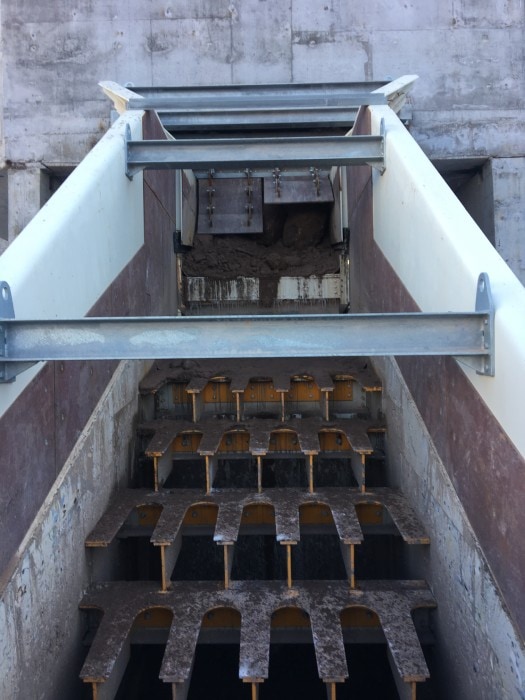
Alluvial material is, by its very nature, heterogeneous: it consists of particles of various sizes, contains fine material, and may contain clay and organic matter. Processing it at a rate of 3,000 t/h requires a primary processing system designed to handle fluctuations in the feed flow without blockages or production stoppages.
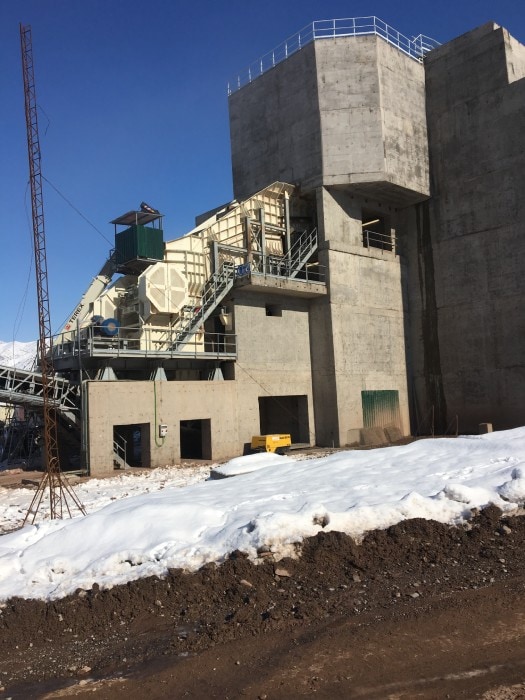
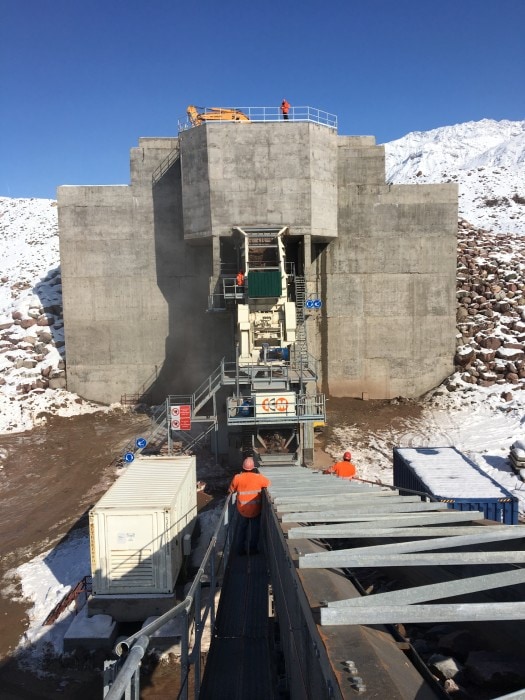
The choice of the JC 54.60 jaw crusher as the primary machine meets this requirement: a feed opening capable of handling piece sizes of up to 1,100 mm and a production capacity suited to the flow rate required by the construction site. The reduction to the 0/700 mm class at the outlet ensures that the material complies with the laying specifications for the dam structure.
The shock absorption and recovery system: the bearing that safeguards continuity
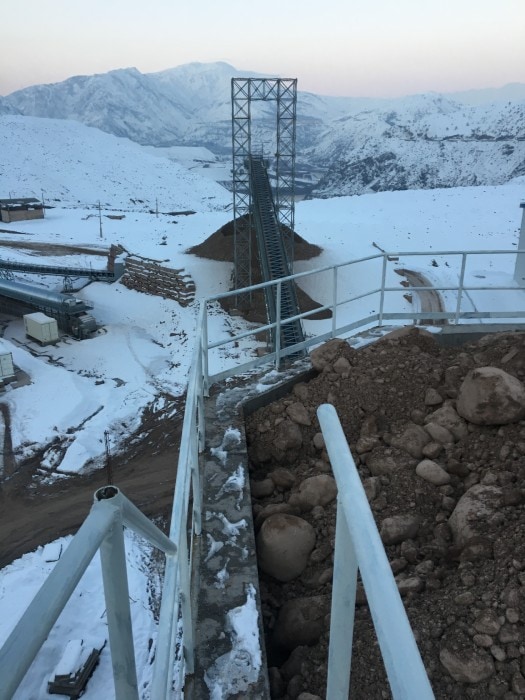
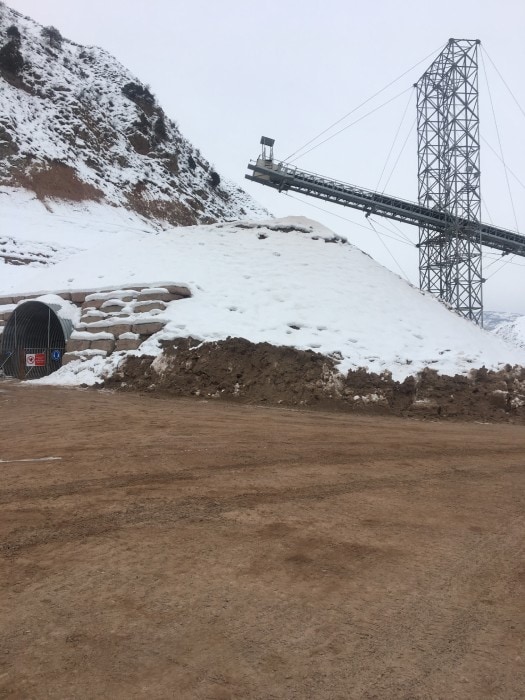
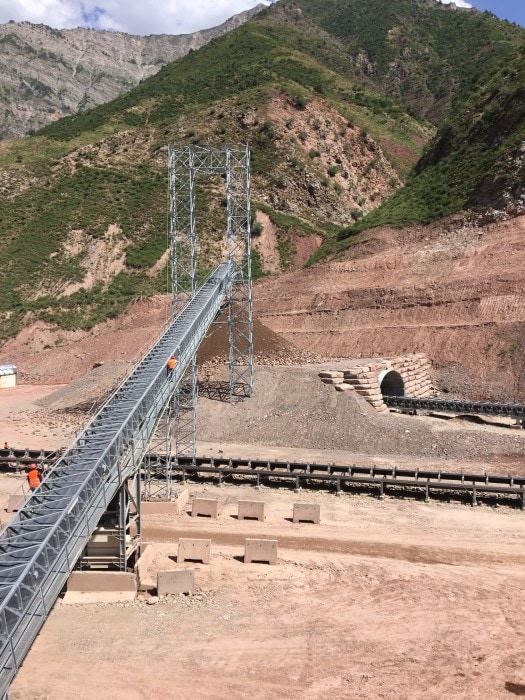
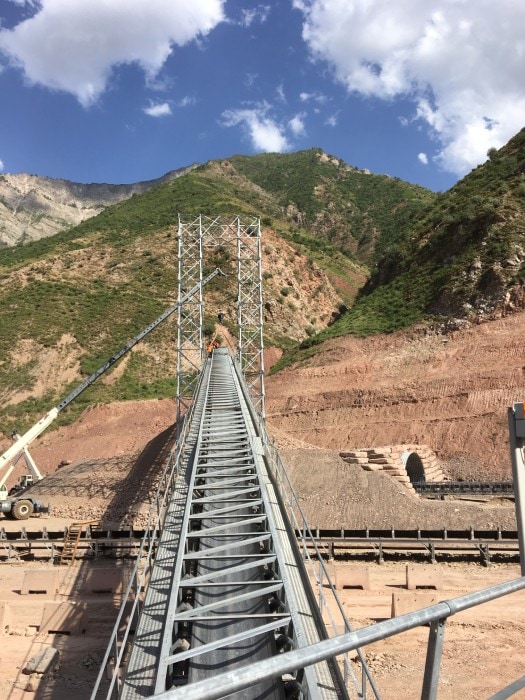
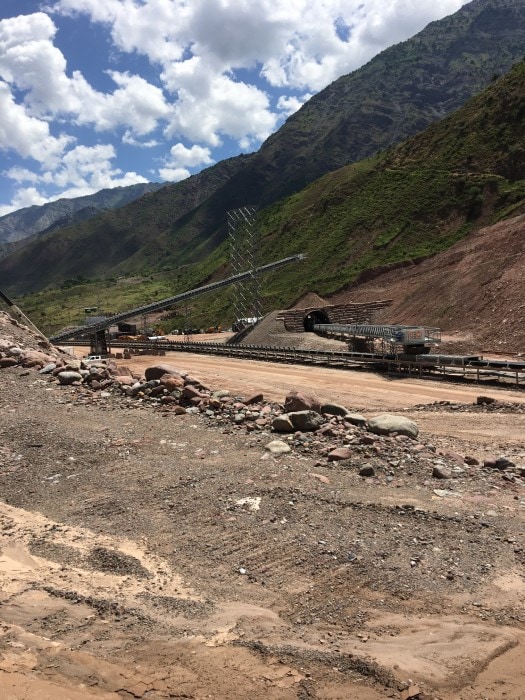
One of the most significant features of the system chosen for Tajikistan is an intermediate stockpile with a return tunnel situated between the primary station and the conveyor belt leading to the dam.
This element is not merely an accessory: it is the mechanism that decouples the variability of the inflow from the continuity of the outflow towards the dam. Primary crushing does not always operate at a constant rate: peaks and lulls in the supply of raw material are absorbed by the intermediate stockpile, which ensures a steady and continuous feed to the conveyor belt leading to the dam, regardless of upstream fluctuations.
It is a design choice that highlights the difference between those who simply build a system and those who design it: the value lies not only in the crushing machine itself, but in the overall architecture that makes the process controllable and predictable.
Operational continuity in Central Asia
Tajikistan presents some of the most challenging operating conditions ICM has encountered internationally: high altitudes, winters with extreme temperatures, logistical isolation, and a construction site that requires continuous operation for years. The system has been in operation since 2017: proof that the construction and design choices made were the right ones for that specific context.
The modular design of the ICM structures, with bolted and standardised components, made it possible to transport and assemble the system even under these conditions. The availability of spare parts and the ongoing technical support have ensured continuous operation over time, without any unscheduled downtime that would have had a direct impact on the site’s schedule.
The results: compliance, continuity, longevity
The system transformed the raw alluvial material excavated by the previous contractor into a product that met the specifications for dam construction at a throughput of 3,000 t/h, ensuring the continuous flow required to supply the site without interruption.
Just like in Laos, the most significant factor is its longevity: the system has been fully operational since 2017. In a context such as that of Tajikistan, with the climatic and logistical challenges it entails, this result is by no means a given. It derives from carefully considered design choices: the right primary machine, the intermediate stockpiling system, and structural elements suited to the context.
The Tajikistan project also highlights an aspect that is often underestimated in system supply, i.e. the ability to step in at a site where the process had already been partially initiated by others, understand its specific requirements, and design a solution that integrates with the existing system without having to build a new one from scratch.
What the Tajikistan project teaches us
- The material does not always come from the quarry: knowing how to process material that has already been excavated and bring it into line with the specifications is a skill different from designing a system from scratch. ICM is capable of doing both.
- The intermediate stockpiling system is a design feature, not an optional extra: the storage basin with an intake tunnel ensures the continuity of the flow towards the dam by absorbing variations in the upstream flow. It is the sort of choice that distinguishes a plant from a system.
- Longevity can also be designed for in extreme conditions: Central Asia, harsh winters, logistical isolation. In operation since 2017. Design choices are just as important as the machine’s technical specifications.
- Integrating with an existing process requires system expertise: ICM did not simply supply a machine, it designed the right solution for the specific conditions on site, including the management of material flow between different stations.
The plant
Do you need to process existing material or integrate a system into a process that is already up and running?
Whether the starting point is an untouched quarry or material already extracted by others, the ICM approach always begins with the same questions: what is your material, what is your production target, and what is the context in which the system is to operate? That’s where the system is designed, you don’t just choose from a catalogue.