
Dam in Laos
The project at a glance
The challenge: 4 million cubic metres of certified aggregates for RCC
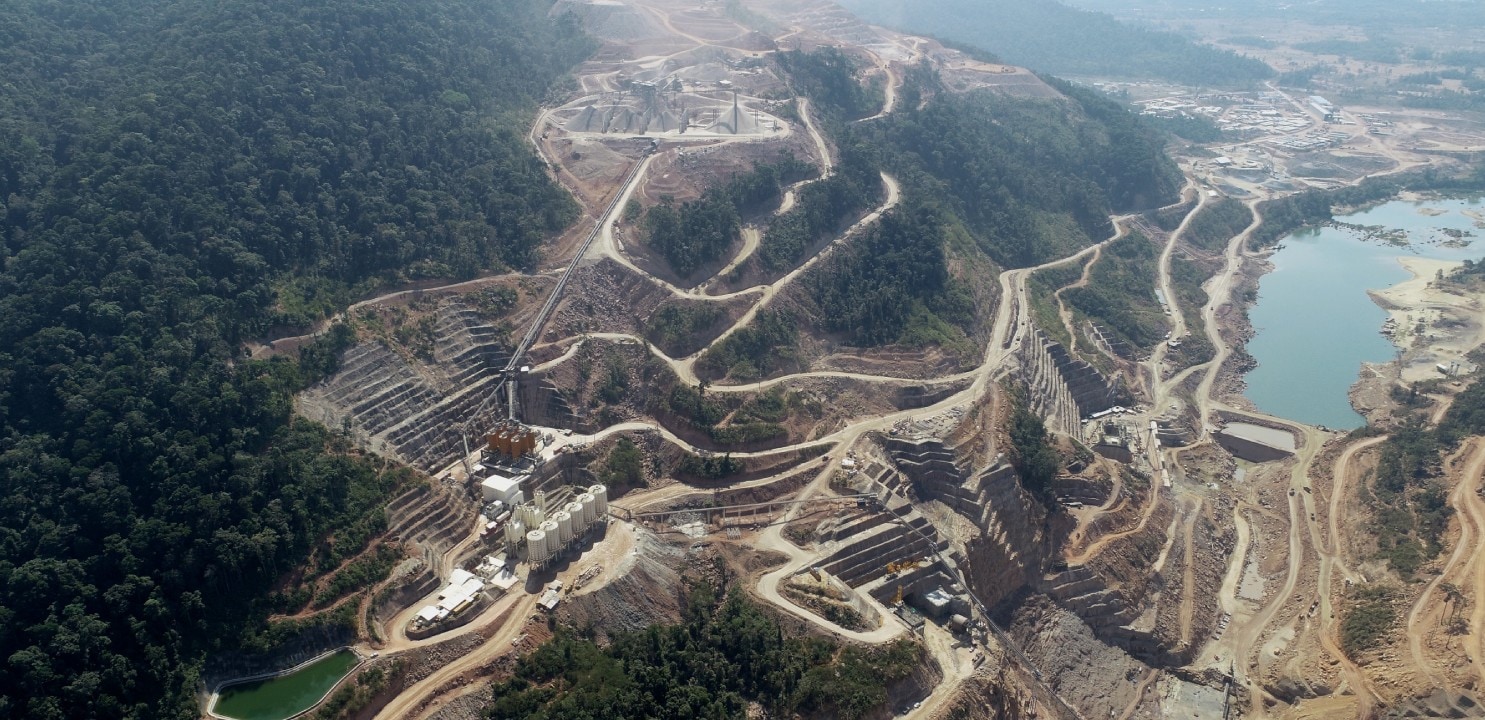
The construction of a dam in Laos required the production of over 4 million cubic metres of aggregates for use in the production of RCC concrete. Such volume cannot be handled by just any plant: a system is required that is designed to operate continuously, in a remote geographical location, on a specific material, with precise particle size classes that remain constant over time.
RCC concrete, which roller compacted in subsequent layers, is extremely sensitive to the quality of the aggregates. Any variation in the particle size distribution results in a structural discontinuity in the dam. ICM’s challenge was not merely to produce 1,500 t/h: it was to ensure that every tonne produced met the design specifications throughout the duration of the project.
ICM was commissioned not only to supply the crushing and screening system, but also the entire aggregate handling system: from the collection conveyors beneath the stockpiles, through the cooling system, to the conveyors transporting the RCC from the concrete plant to the dam.
The ICM approach: an integrated system from quarry to dam
Sandstone: a different material, the same method
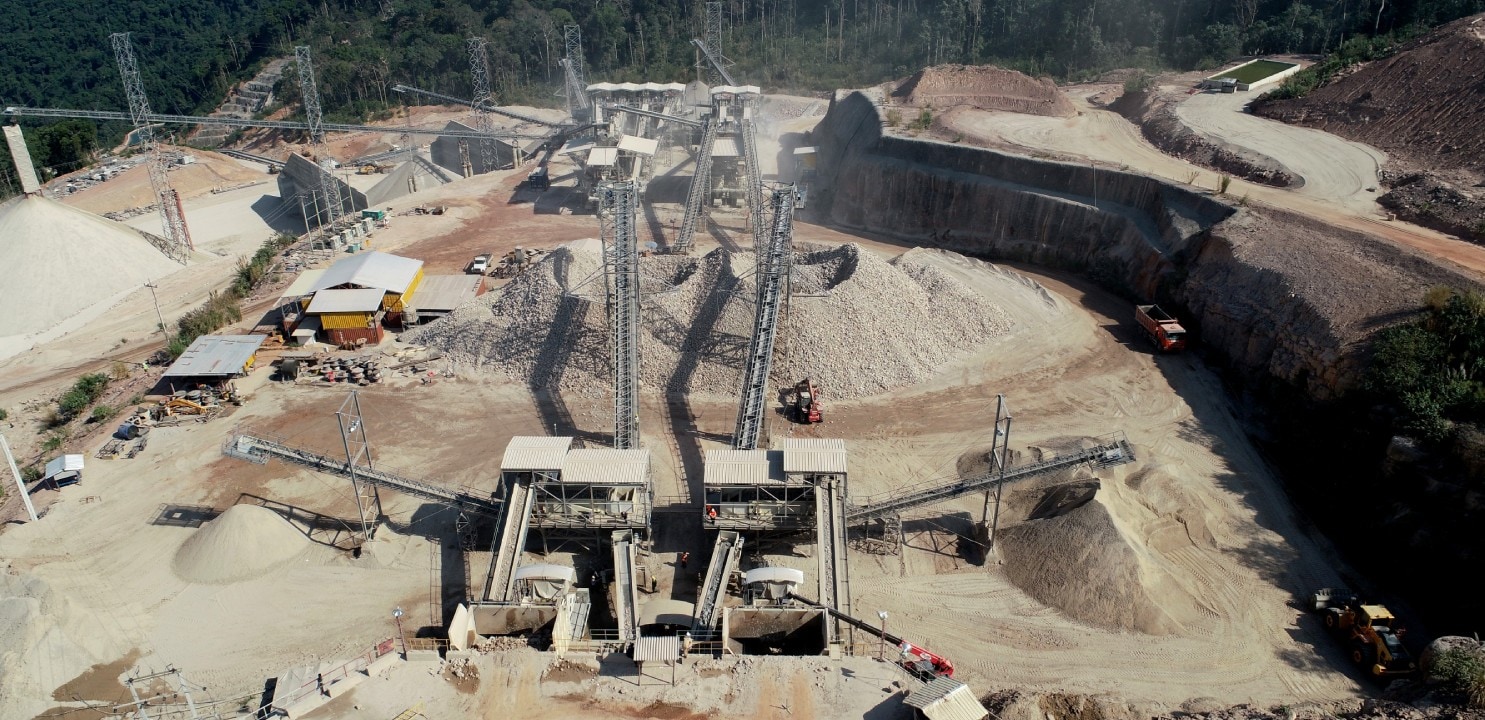
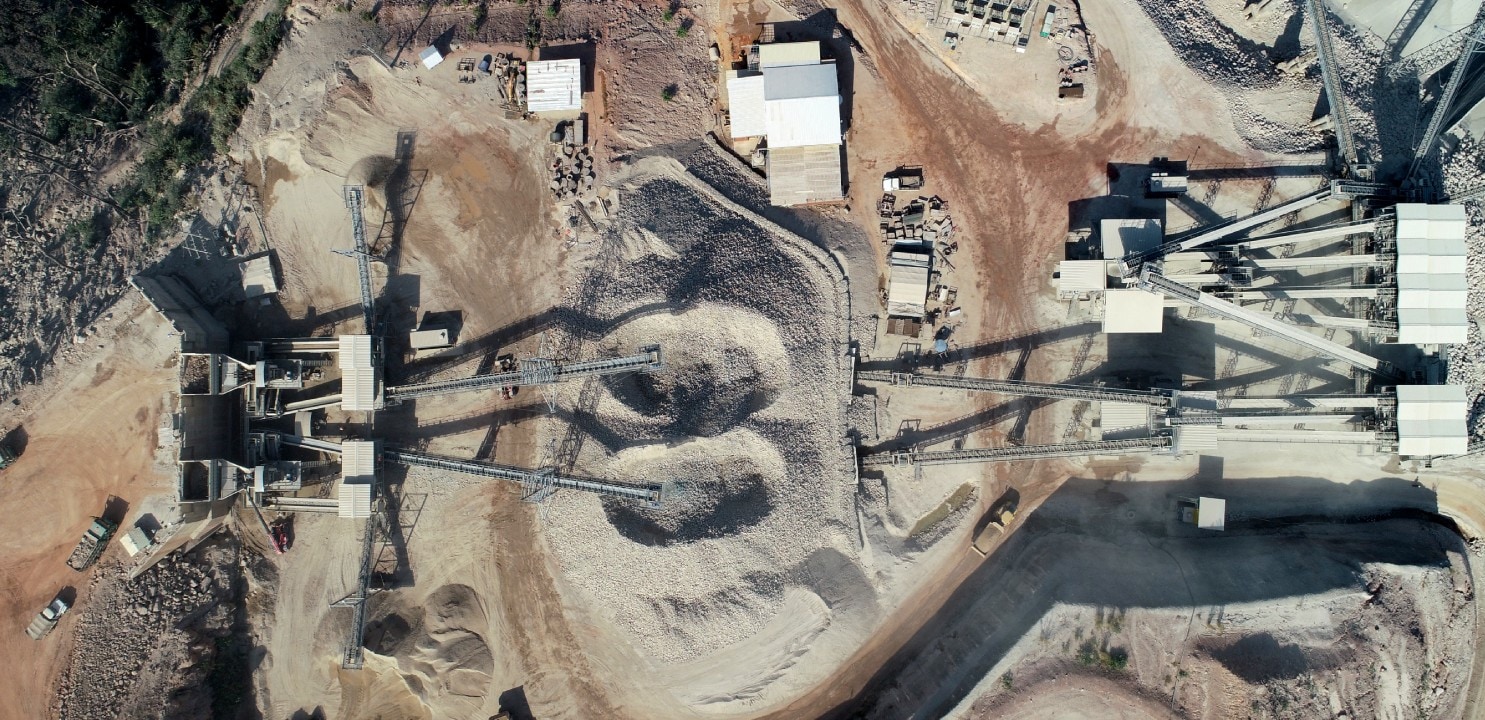
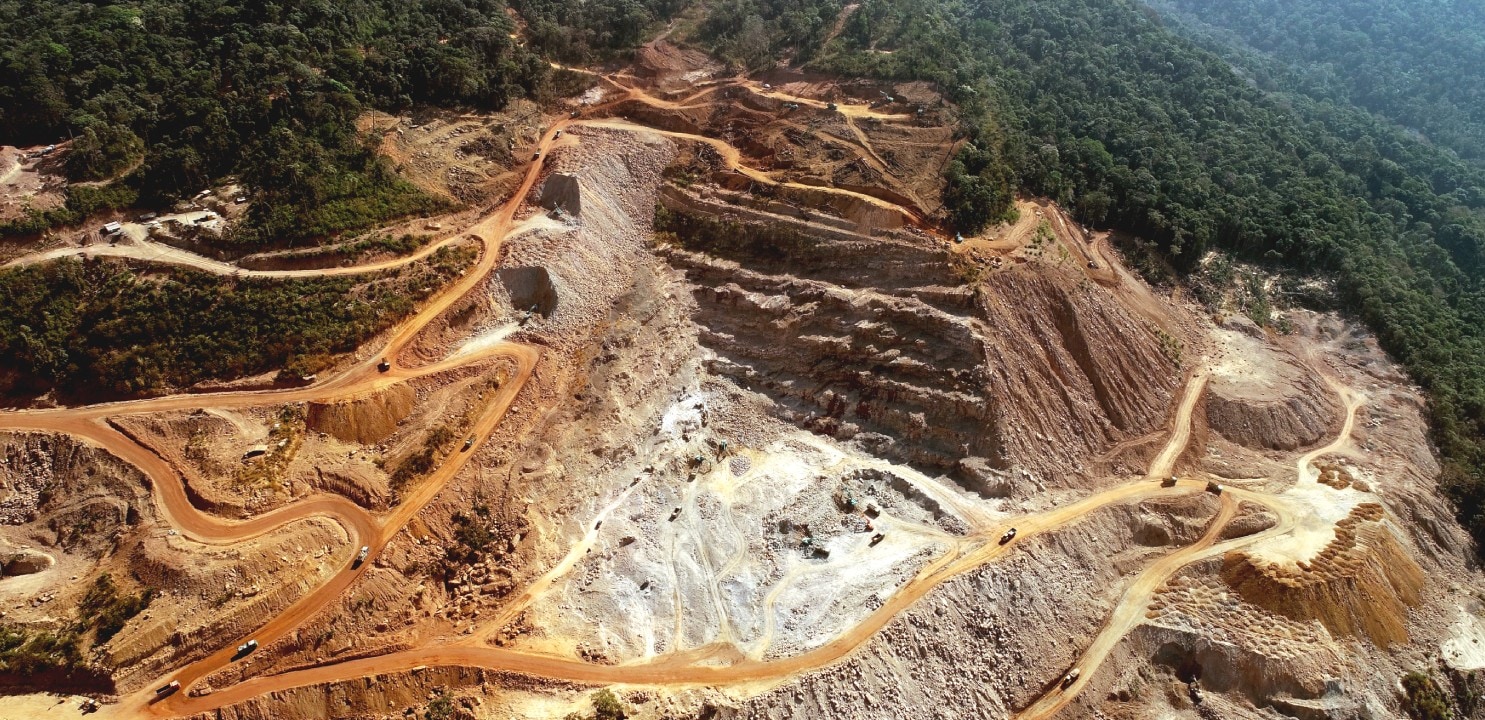
Unlike the granite that is processed in Ethiopia, the material processed in Laos is sandstone: a sedimentary rock with different levels of abrasiveness and strength, which require specific crushing methods. The feed size of up to 900 mm and the four required product classes (0/5, 5/10, 10/20, 20/40 mm) determined the configuration of the three-stage crushing process.
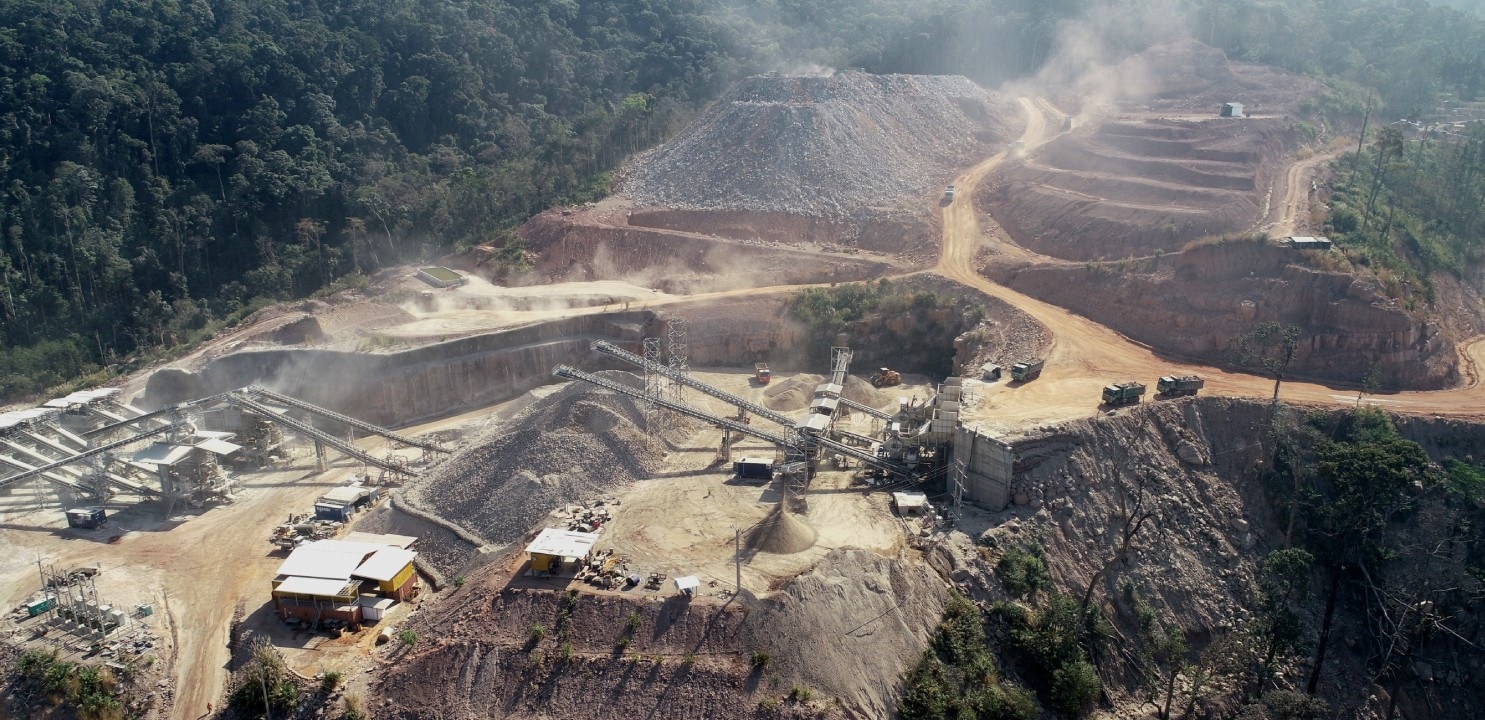
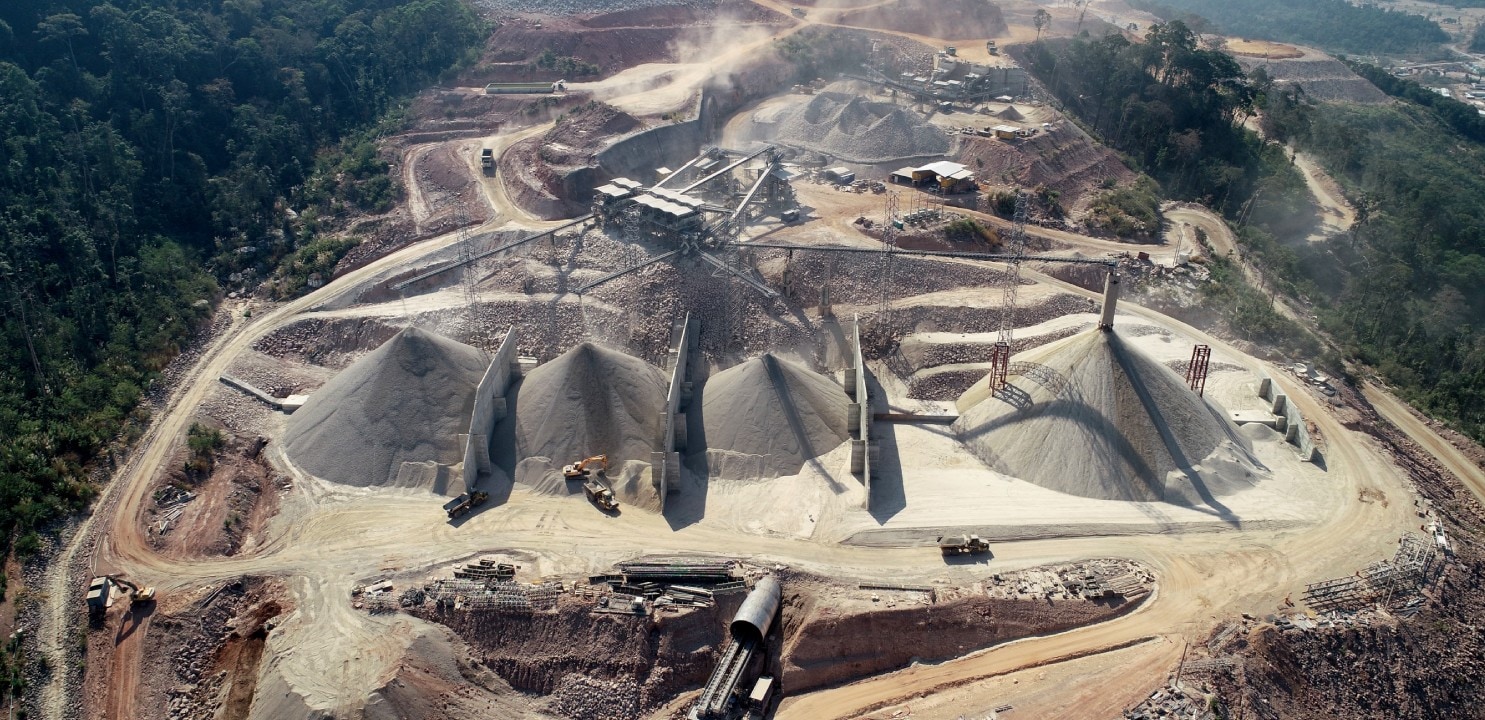
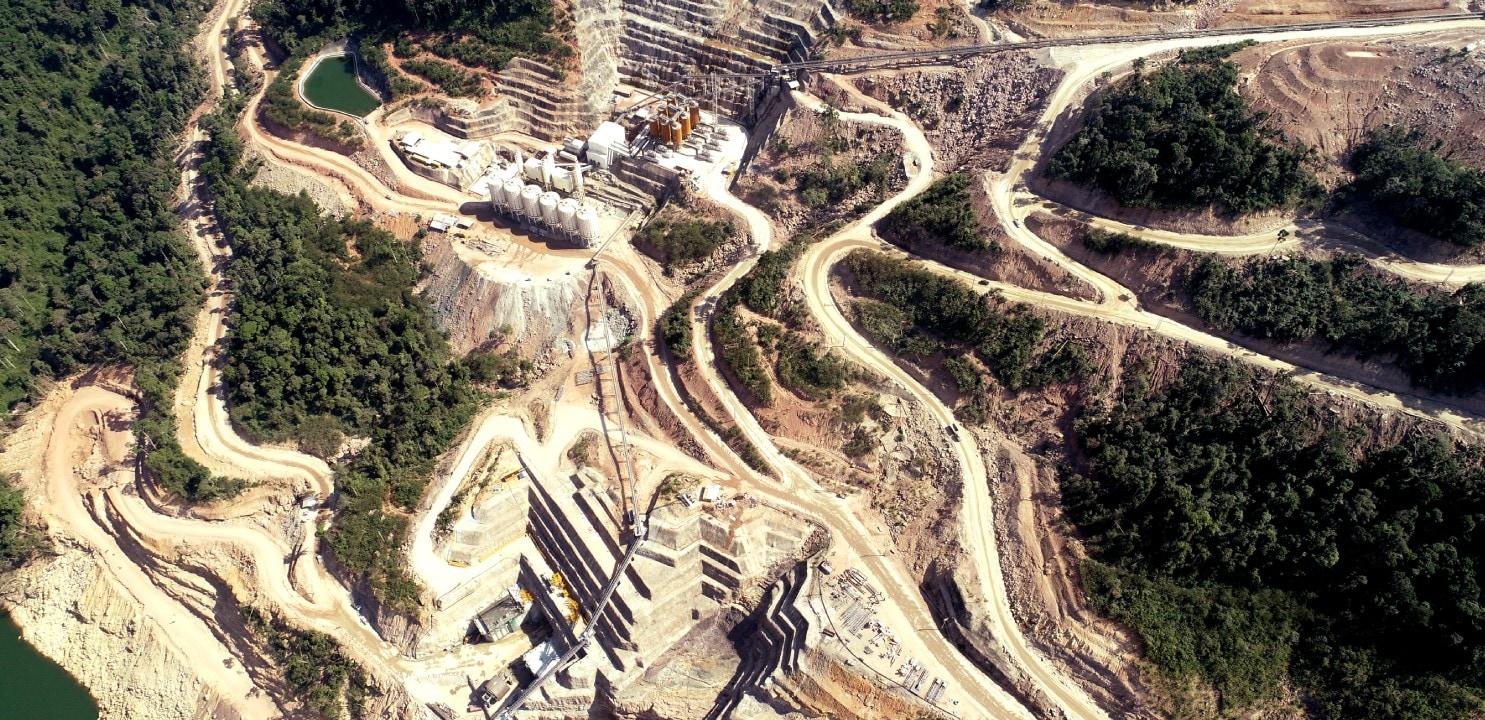
The primary crushing using a JS 45.52 jaw crusher reduces the initial particle size. The secondary crushing using the MVP 550 and the tertiary crushing using the MVP 450 and the T-MAV 21 ICM ensure the quality and consistency of the particle size distribution of the four classes. The TSH screening system completes the separation process with the precision required for structural concrete.
The handling system: conveyors for every stage of the process
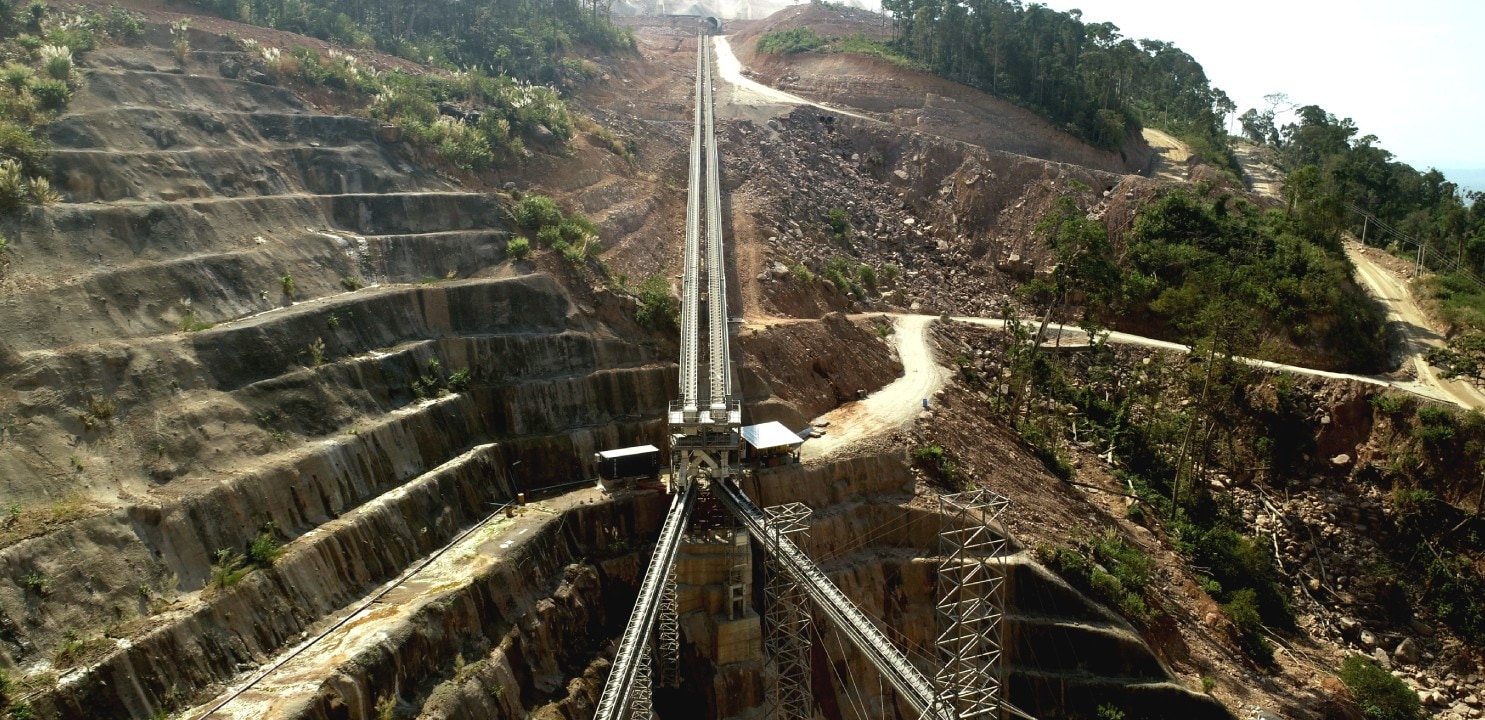
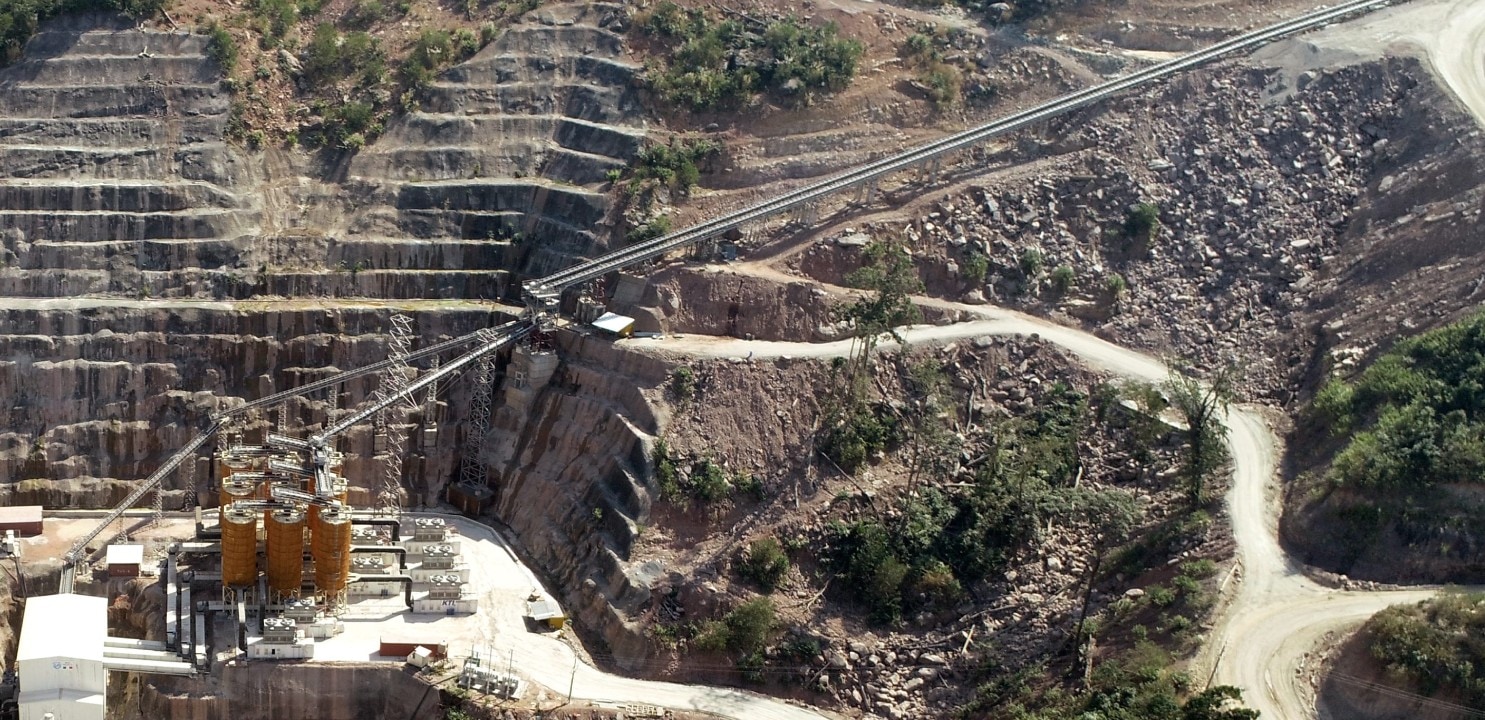
The conveyor beneath the piles feed the aggregate cooling system, a necessary step in tropical climates to make sure that the temperature of the RCC concrete remains within the design limits. From there, two downhill conveyors, each 400 metres long, with capacities of 1,800 t/h and 800 t/h, transport the aggregates to the cooling system. Once cooled, the aggregates are fed into the concrete plant.
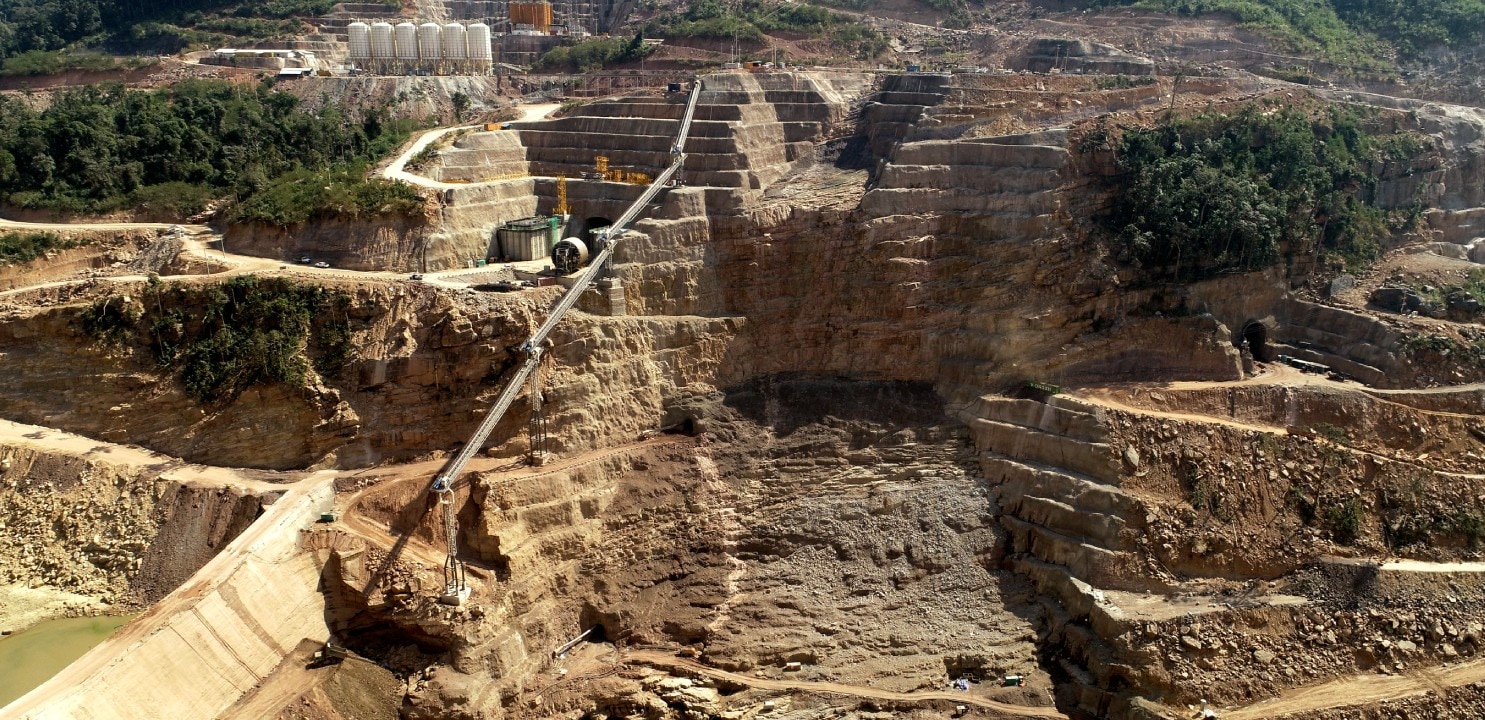
The transport of the RCC, which is packaged at the concrete plant and transported to the dam, is handled by a series of conveyor with a capacity of 2,500 t/h and a clear span of 60 metres. A conveyor system with these characteristics requires precise structural engineering: the 60-metre clear span imposes loads and stresses that must be calculated and managed with the same care as the production plant itself.
Operational continuity in a remote tropical environment
Laos presents unique operational challenges: it is characterised by a tropical climate with heavy rainy seasons, limited infrastructure, distance from European supply centres, and a site that requires continuous production for years, not months.
The modular, bolted design of ICM systems, the availability of spare parts and the ongoing technical support provided have enabled the system to operate without interruption since 2016. This proves that a well-designed system does not require any exceptional maintenance to remain efficient over time.
The results: 1,500 t/h of certified aggregates in four classes, for over 4 million m³ of RCC concrete
The plant produced the four required particle size classes (0/5, 5/10, 10/20, 20/40 mm) with the consistency required for mixing RCC concrete, ensuring the flow continuity that a site of this scale cannot afford to interrupt.
All system components were designed with the end result in mind: a continuous production flow from rock to structure, without bottlenecks or unscheduled interruptions.
The volume to be produced – over 4 million m³ of aggregates – required each stage of the process to operate in a coordinated and predictable manner
What the Laos project teaches us
- Longevity is the true KPI: a system that has operated continuously for years in a remote tropical climate is the most concrete proof of engineering quality. Technical specifications are stated, durability is proven.
- The system extends beyond the plant: recovery, cooling and RCC conveyors operating at 2,500 t/h with a clear span of 60 metres. ICM designs the entire production process, not just the crushing stage.
- Each material requires a specific design: sandstone and granite have different characteristics. The system configuration is always based on an analysis of the material, rather than on a predefined model.
- Business continuity is planned for: a remote facility that needs to operate for years requires design choices, the availability of spare parts and technical support that only those familiar with the process can guarantee from the outset.
The plant
The project on video
Are you designing a system for a major hydraulic or infrastructure project?
Dams, canals, hydroelectric power stations: major infrastructure projects require certified aggregates in huge quantities, produced on a continuous basis and of consistent quality over time. ICM designs systems that do more than just get the job done: they are built to last and to maintain their performance throughout the life of the site.