
Ecodem plant
The project at a glance
The challenge: six alluvial material classes with two market destinations
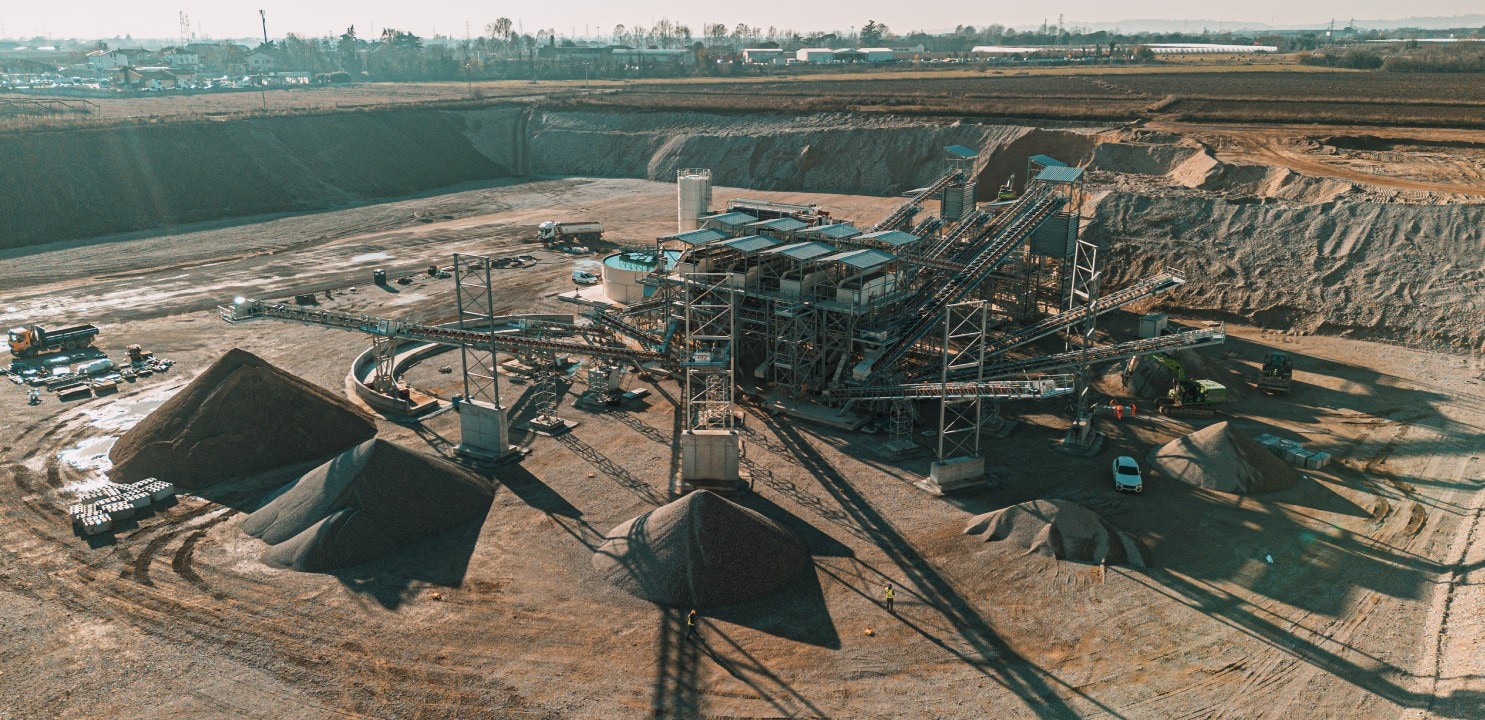
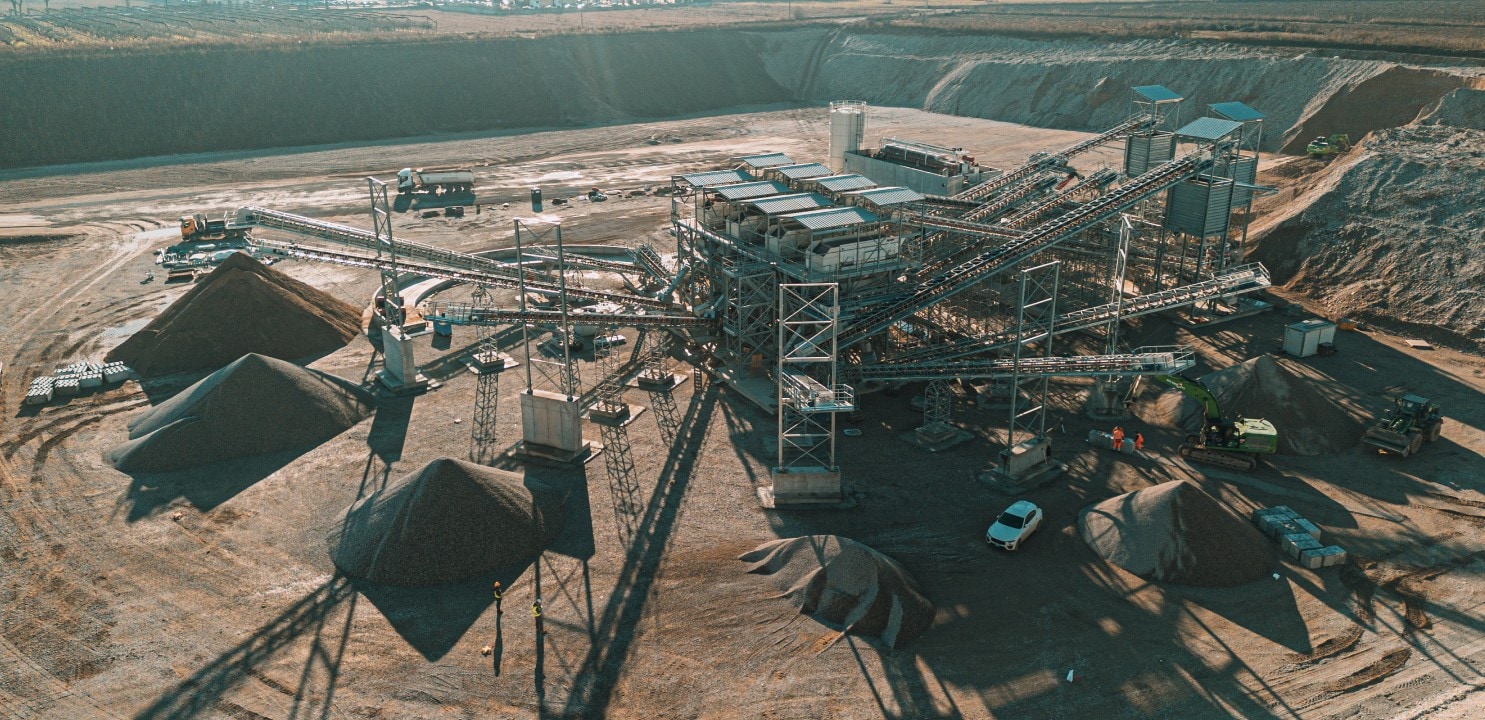
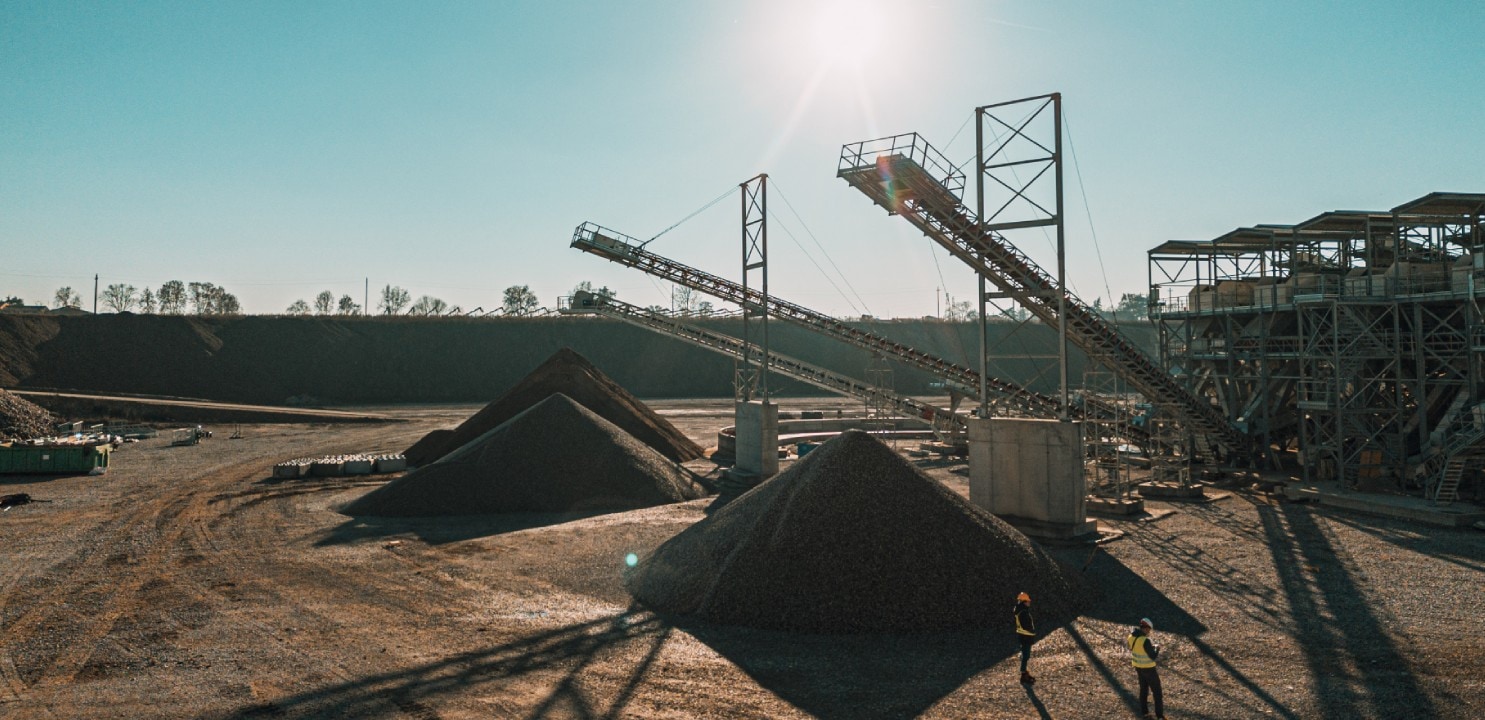
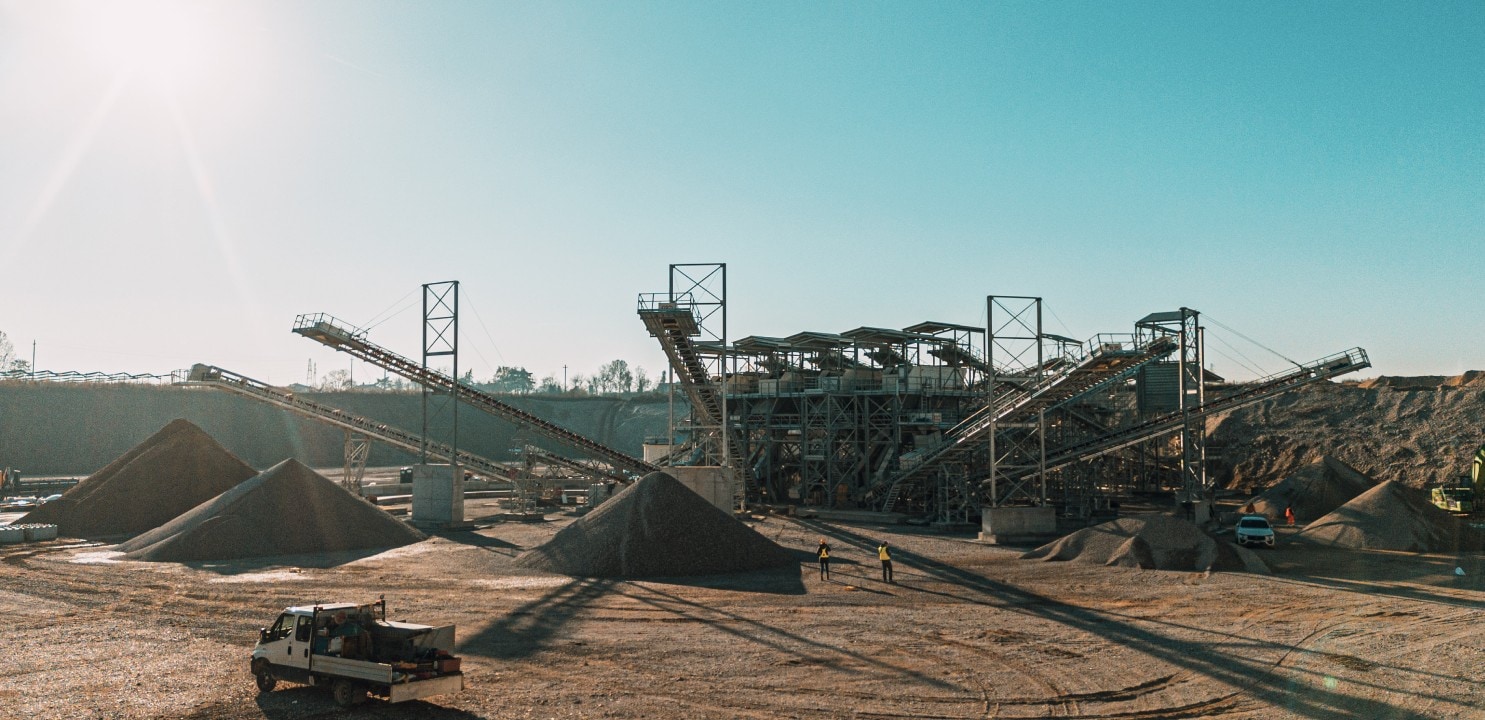
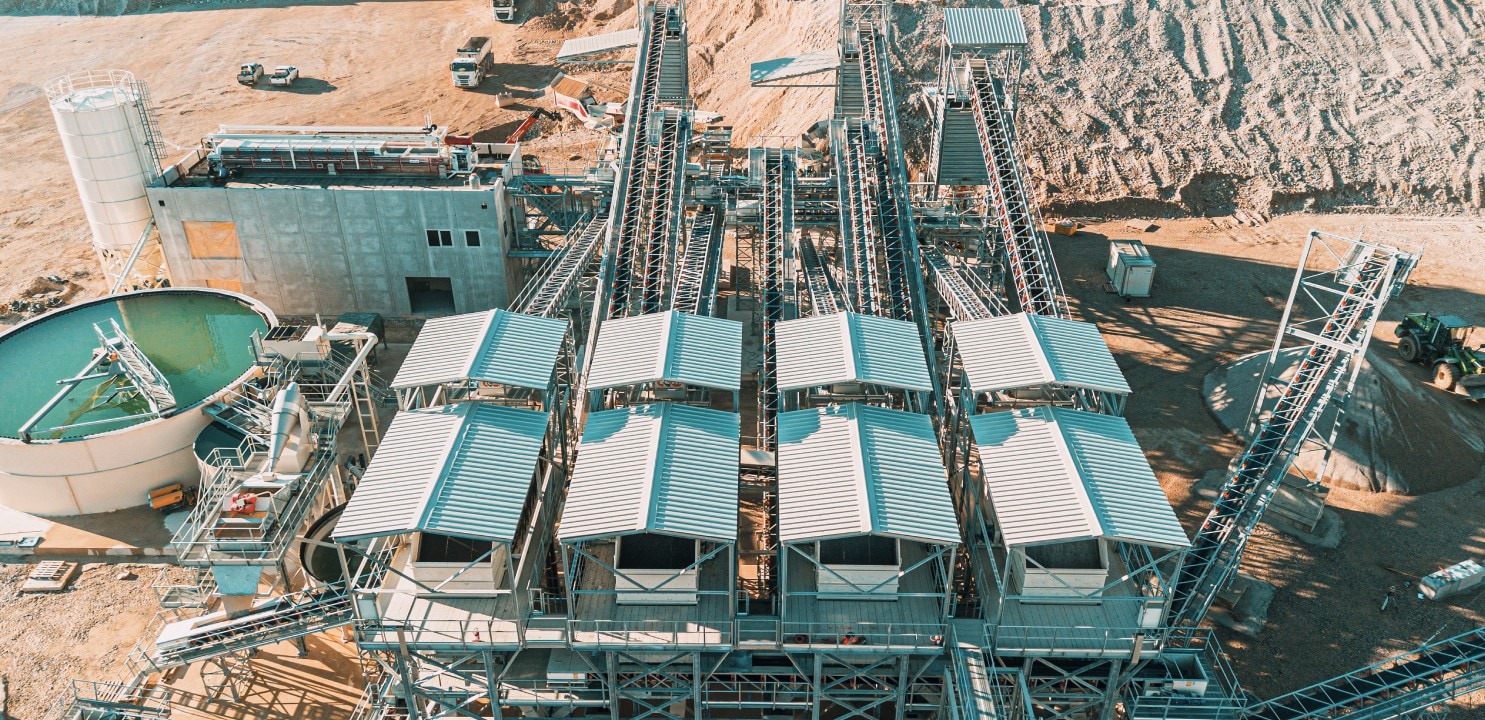
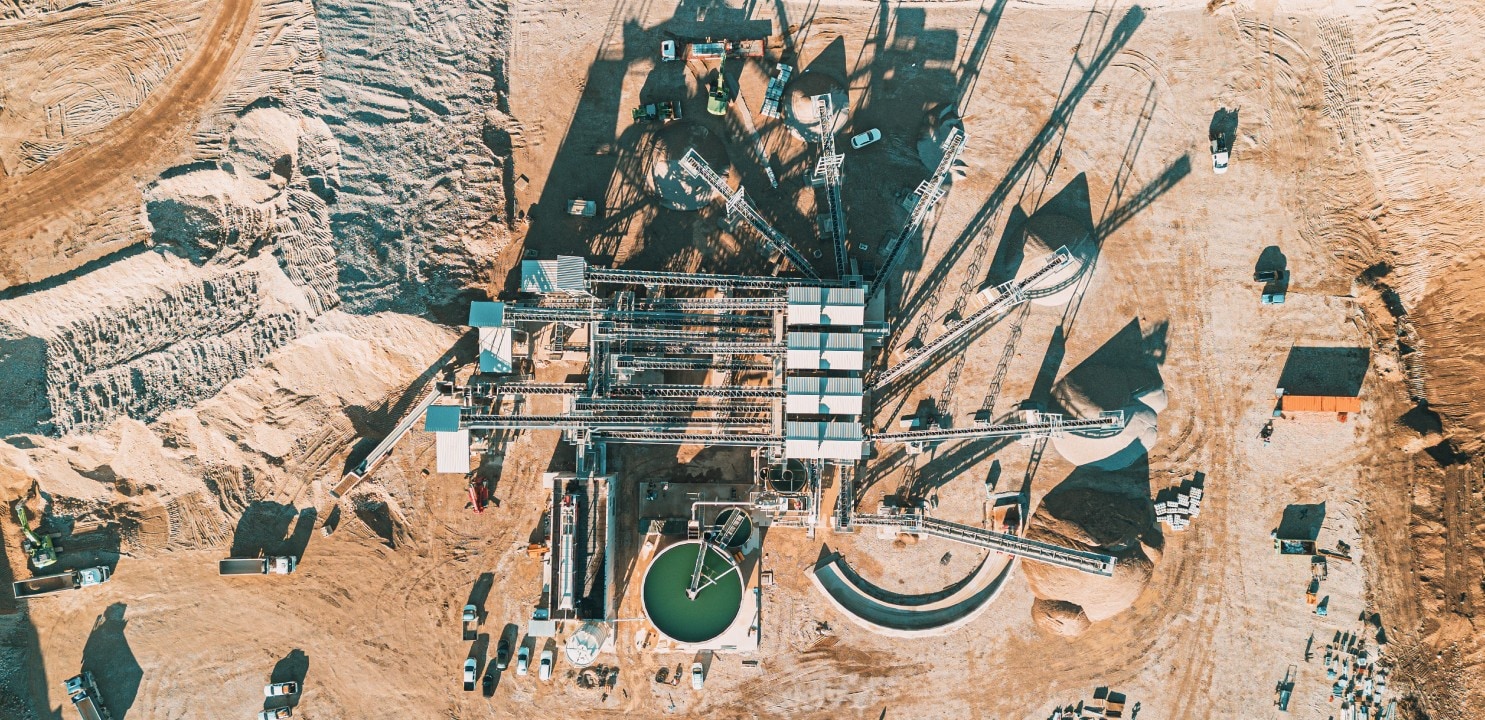
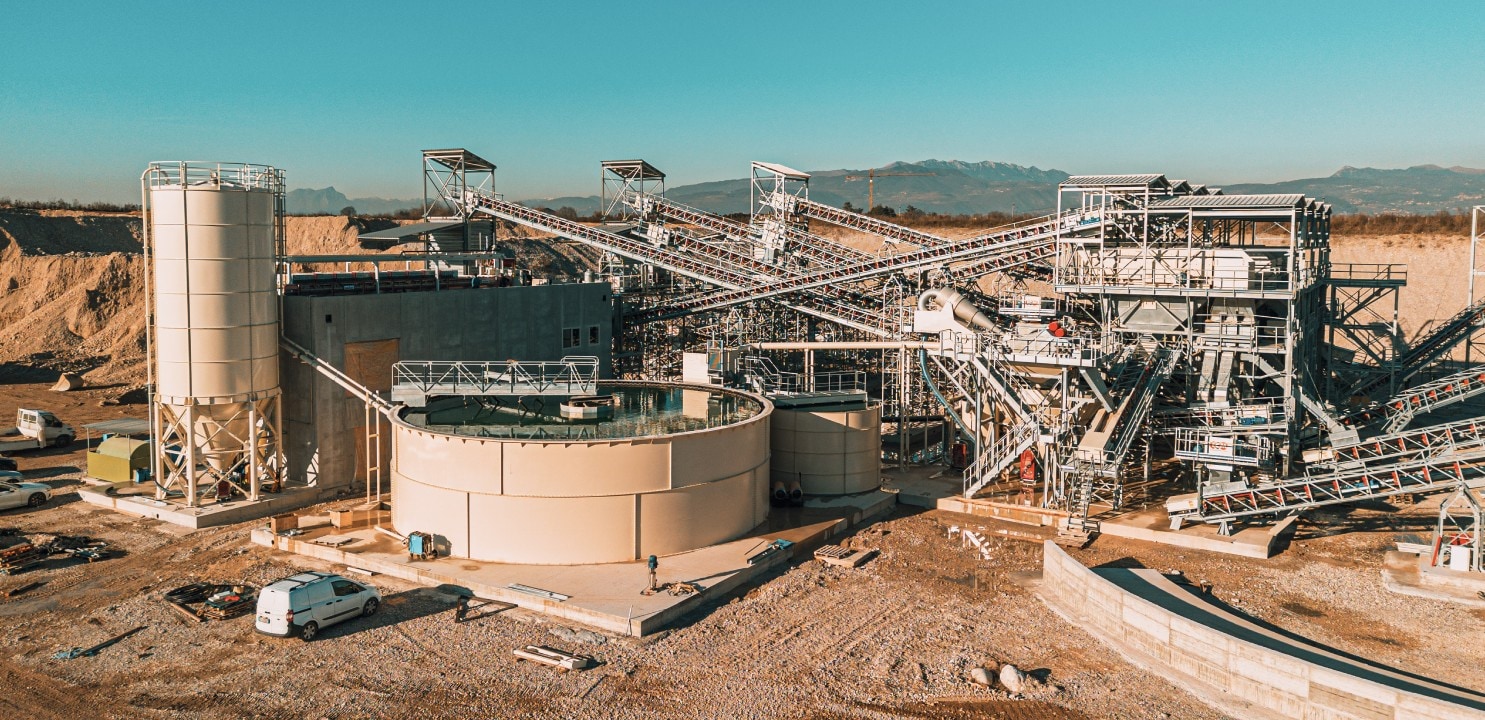
The Ecodem plant at the Bertacchina Quarry in Verona had to meet a specific requirement: to produce six distinct particle size classes from alluvial material, with two different market destinations requiring different processing methods. Natural classes (0/5, 5/15, 15/25) are produced using a wet process that involves washing, the crushed aggregate classes (4/8, 8/12, 12/25) are produced using a dry process. One system, two production cycles, six end products.
The complexity lay not only in the separation of the classes, but in the management of the sand as well. Alluvial material produces sand with a variable particle size distribution which, without an active control of the process, results in an unstable fineness modulus. In a market such as that for concrete, where the fineness modulus of the sand has a direct impact on the performance of the finished product, this variability results in rework, corrective mixes and a loss of the product’s commercial value.
The aim was therefore to design a system capable of managing the two lines independently, with the flexibility to divert material from one cycle to another depending on demand, and with active control of the composition of the outgoing sand to maintain a constant and calibrated fineness modulus.
The ICM approach: two lines, distributor trolleys and active sand control
Two separate lines for two production cycles
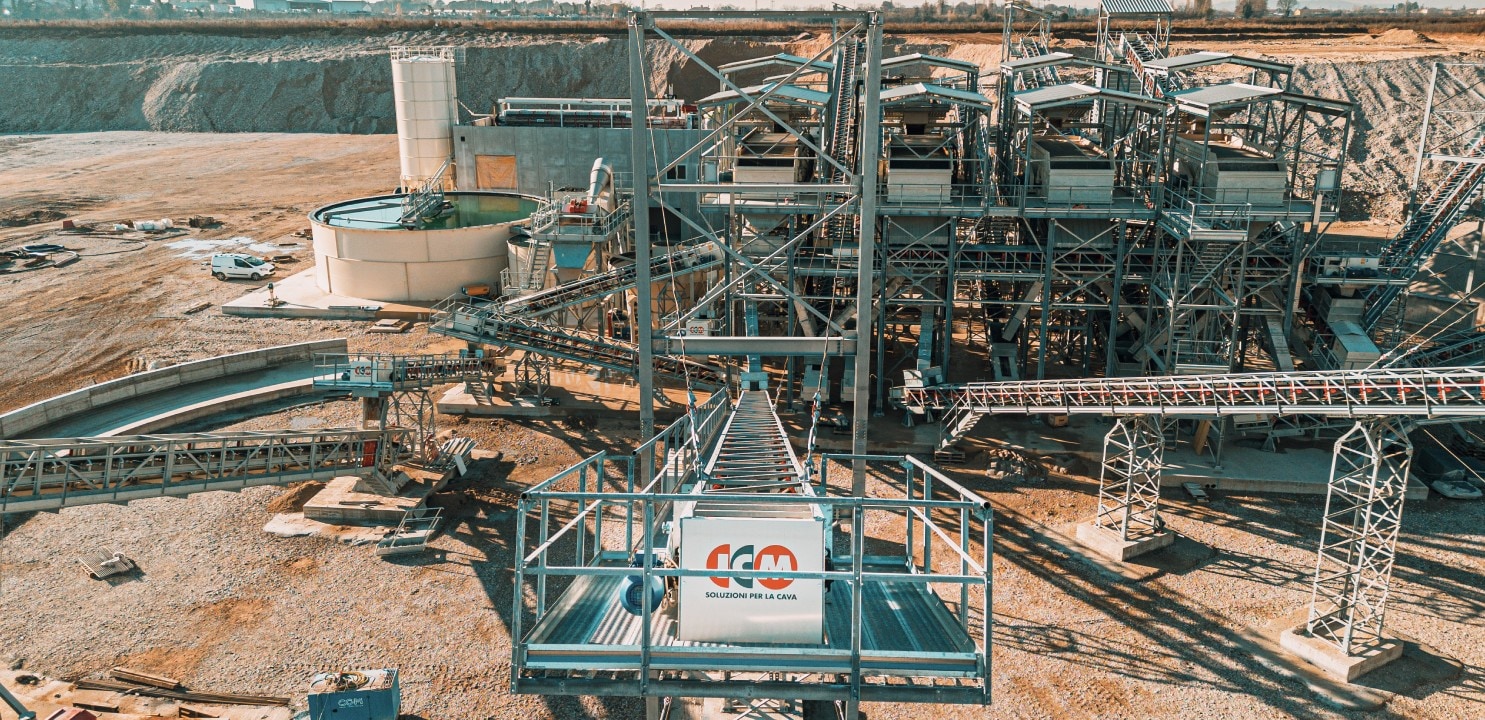
The system is organised into two main lines. The first handles the cycle for washed natural material: classes 0/5, 5/15 and 15/25 are produced through screening, washing and the treatment of process water. The second handles the dry crushing cycle: classes 4/8, 8/12 and 12/25 are produced via secondary crushing using an MVP 450x cone crusher and tertiary crushing using two T-MAV 21 crushers, without washing.
The separation into two distinct lines allows the process parameters to be optimised for each target market, without the compromises imposed by the coexistence of the two cycles within the same flow. Each production line operates using the correct parameters for its end product.
Automatic distribution trolleys: flexibility between production lines
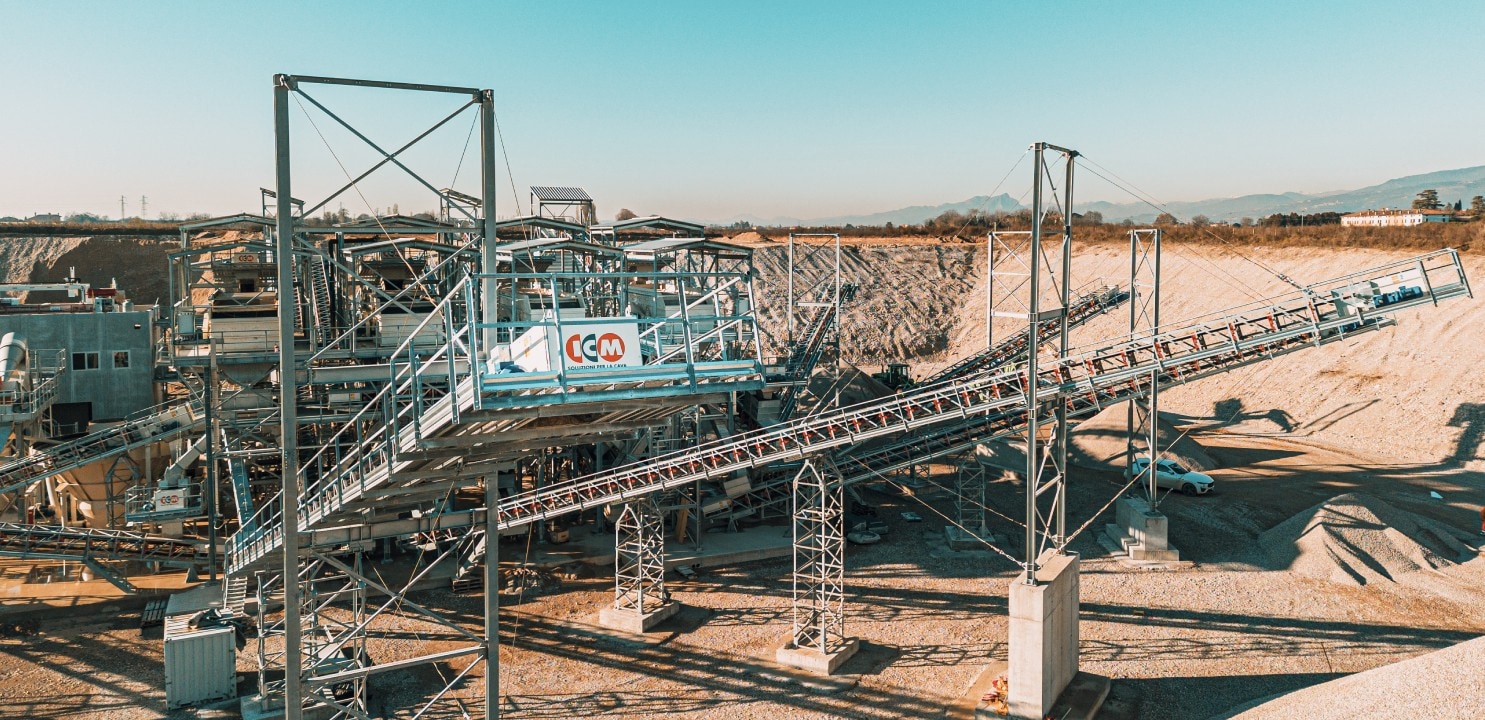
The factor that makes the system flexible in response to market demand is the presence of several automatic distribution trolleys, positioned at critical points in the process. These devices allow material to be diverted from the dry aggregate cycle to the washed aggregate cycle and vice versa, depending on production requirements.
Trolley management is integrated into the automation system: it does not require manual intervention by the operator, but operates according to the parameters pre-set in the production recipes. When market demand changes, it is the formula that changes, and not the physical configuration of the system.
Active control of the sand fineness modulus
The management system controls scales and distribution trolleys to blend the sand into the 0/2, 2/4 and 4/5 fractions in the proportions required to achieve the target fineness modulus. This means that the sand produced is not a passive by-product of the crushing process, but a product actively formulated by the control system in accordance with the objectives set by the operator.
The pre-set recipes formalise this logic: the operator selects the recipe corresponding to the required product, and the system automatically manages the process parameters to achieve the result. This reduces reliance on the individual skills of the operator and ensures that the product is reproducible over time, regardless of who is operating the system.
Energy efficiency: 1.37 kW per tonne
The energy consumption of the system is 1.37 kW per tonne of material processed. This figure is a direct result of the design choices: the correct sizing of the machinery in relation to the volumes processed, the automation that prevents overloading and idling, and the flow configuration that reduces unnecessary handling. Energy consumption per tonne is a direct indicator of the system’s operating cost: every kW saved per tonne is multiplied by the number of tonnes produced each year.
The results: six certified classes, sand with a stable fineness modulus, 1.37 kW/t
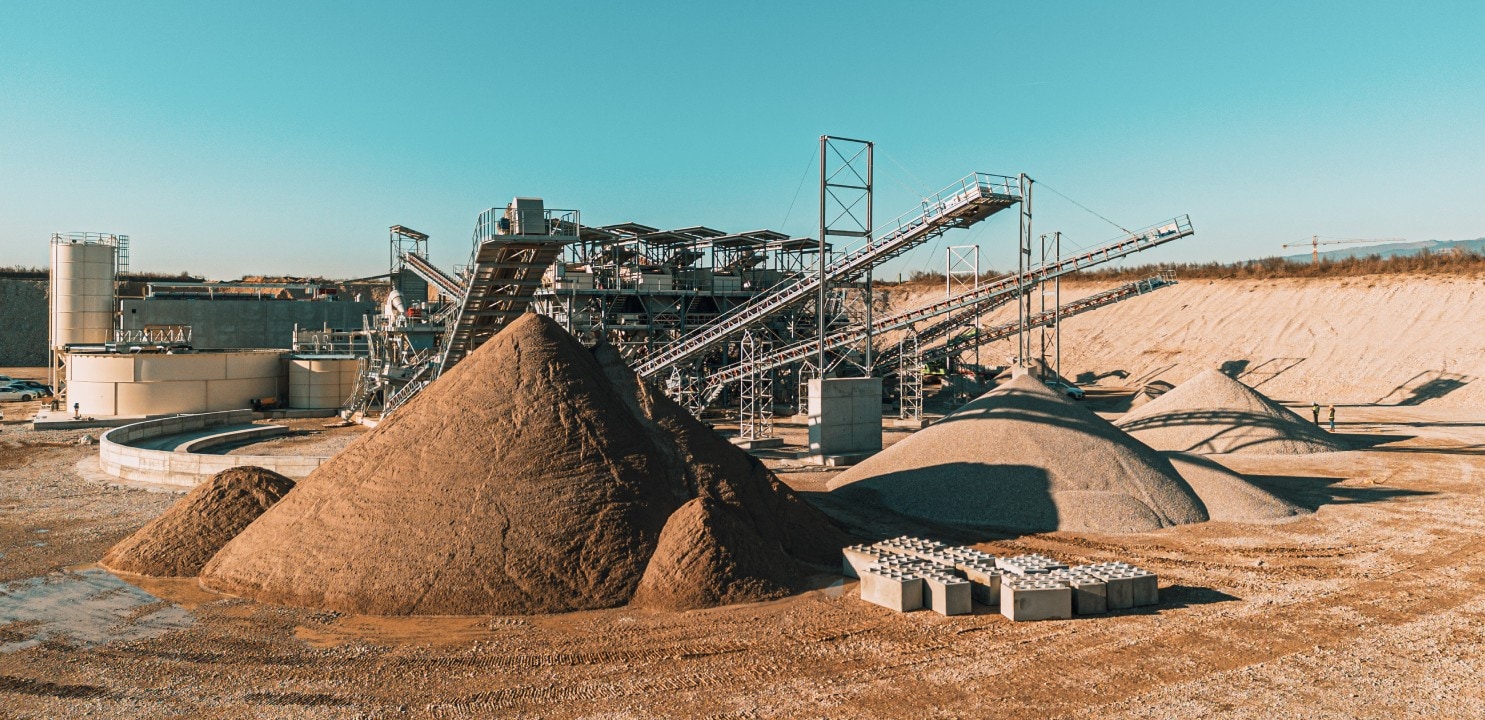
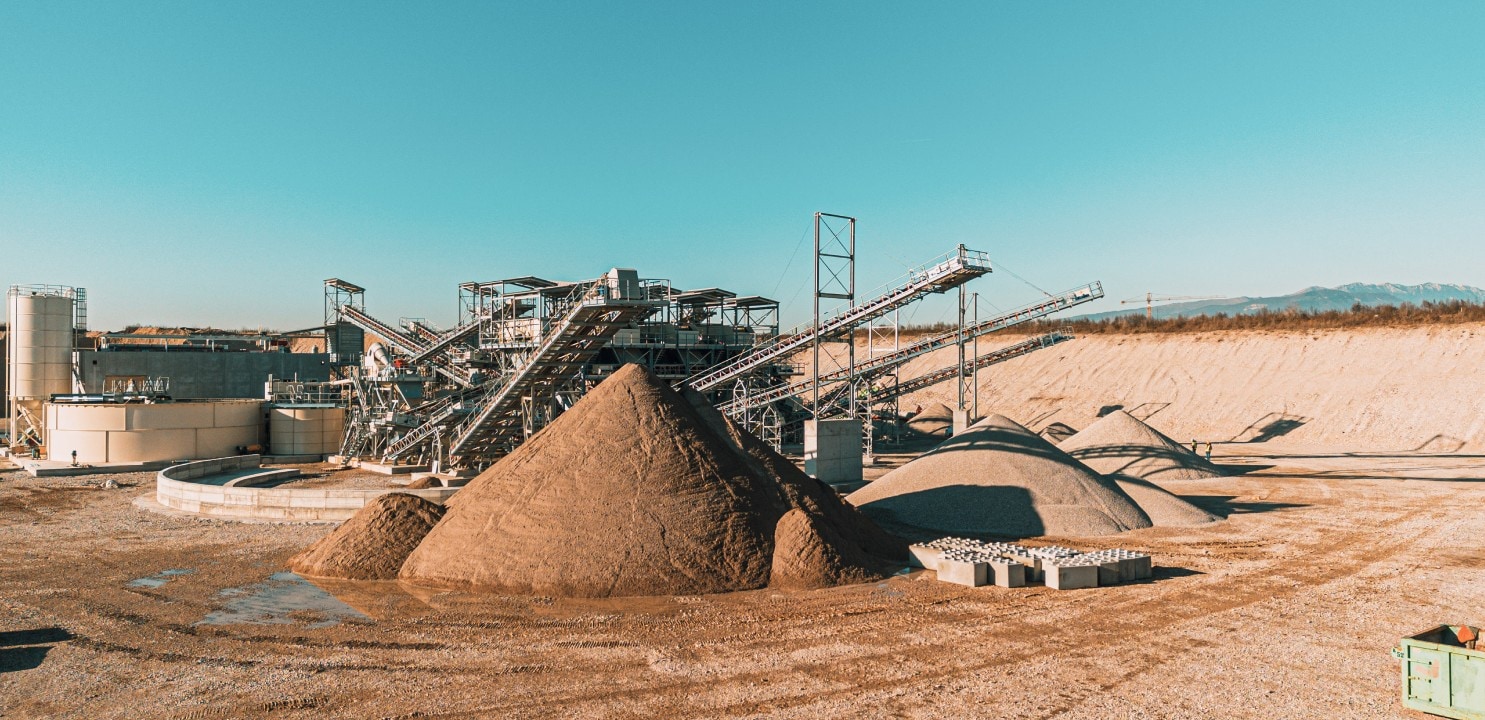
The produces the six required classes at 450 t/h, with the flexibility to manage both processing cycles according to demand. The sand is actively processed by the control system to maintain a constant, calibrated fineness modulus, thereby reducing the need for reworks and increasing the product’s commercial value.
The integrated sand, water and sludge treatment cycle ensures the process complies with environmental regulations, with no uncontrolled water discharges. The power consumption of 1.37 kW/t is the measurable result of the system’s overall efficiency: correctly sized machinery, optimised flow, and automation that eliminates energy wastage.
What does the Ecodem project teach us?
- Two separate lines for two markets: processing natural, washed and dry-crushed materials in the same system requires a design that separates the cycles and optimises each one for its intended purpose. A single compromised line would not serve either market well.
- Distribution trolleys offer operational flexibility: the ability to divert materials between cycles in line with demand transforms a rigid plant into a system that can adapt to the market, without the need for manual intervention.
- The fineness modulus is actively monitored: sorting the sand into three particle size fractions using scales and trolleys controlled by the automation system is what makes sure that the product remains consistent and certifiable over time.
- Pre-set recipes reduce reliance on operators: formalising production parameters in selectable recipes reduces errors, ensures product repeatability and simplifies the management of the system, regardless of the individual skills of those operating it.
- 1.37 kW/t reflects the design, it is not the result of post-installation optimisation: energy efficiency is achieved through the correct sizing of the machinery and the design of the flow, not through subsequent corrective measures.
The plant
Are you planning an aggregates system with multiple classes and different market destinations?
When a system has to serve multiple markets with different products, process configuration is just as crucial as the choice of machinery. ICM designs systems with the operational flexibility required to adapt to demand, featuring automation that reduces reliance on operators and active product quality control.